The fastest-growing risk in tech services isn’t the pace of innovation. It’s the efficiencies innovation creates.
AI is improving delivery faster than the hour-based business model can absorb. Teams are shipping faster, generating more output per consultant, and compressing timelines. In firms built on selling time, that creates a quiet but structural tension. The very gains that should make you stronger begin to destabilize the economics you’ve optimized for years. This is the new economic reality of AI-first consulting.
When Efficiency Breaks the Model
Most of us built our services firms the same way: keep margins healthy, keep utilization high, grow by hiring. Revenue scaled with billable hours.
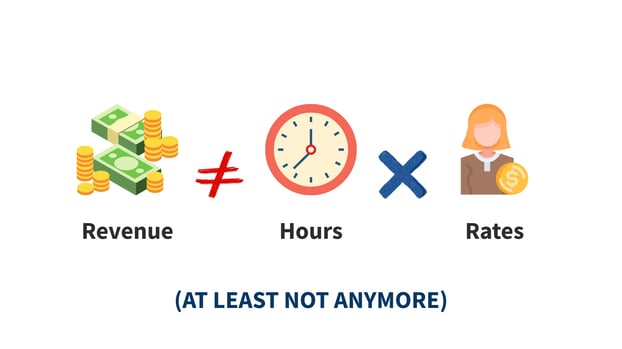
Revenue = Hours × Rate
Growth = More Billable Hours
If revenue depends on hours, efficiency starts cutting into revenue
That worked because products handled standardized problems, and what remained required customization — and customization required engineering hours.
AI changes that.
When repeatable work moves into systems, and parts of customization get automated, then engagements require fewer hours. If revenue depends on hours, efficiency starts cutting into revenue.
That leaves you with a hard tradeoff: protect the old model and risk falling behind, or lean into AI and accept that parts of your existing economics may shrink before they improve.
The Economic Shift
In the traditional services model, money follows labor. Revenue scales with billable hours. Growth requires hiring. Margin discipline depends on utilization and rate control. In an AI-first model, money increasingly follows capital investment. Systems absorb repeatable work. Delivery compresses. The strength of the firm depends less on how many people you have and more on how intentionally you build and deploy reusable assets.
As IP becomes more central, average billable rate becomes a weaker proxy.
When that happens, the metrics that once signaled health start to lose their meaning. Here are three concrete shifts we expect in the metrics:
From Utilization → To Strategic Bench Investment
Utilization used to be the heartbeat of the business. If your team was 75–80% billable, you were disciplined and profitable. But in an AI-first firm, some non-billable time isn’t waste — it’s capital investment. Time spent codifying patterns, improving automation, and integrating learnings into shared systems builds assets that reduce future delivery costs.
That work requires intentionally allowing utilization to drop. It needs accountability and budget, just like client work. A singular focus on maximizing billable utilization inside customer projects will prevent the system from improving — and over time, it will stagnate the business.
From Average Billable Rate → To Per-Project Gross Margin
Raising rates used to be the cleanest way to improve margins. Higher rates signaled expertise and protected profitability. But as IP becomes more central, average billable rate becomes a weaker proxy. Margin growth increasingly comes from:
- Productized or system-enabled revenue
- Efficiency gains driven by reusable IP
- Elevating junior consultants through platform support
Focusing only on rate creates a defensive mindset. The real question becomes: how do we continuously improve the gross margin of our engineering talent through capital investment in systems?
From Headcount Growth → To Revenue Growth Without Proportional Hiring
In the old model, growth and hiring moved together. More revenue meant more people. In an AI-first firm, strength shows up when revenue grows faster than headcount. That gap reflects the return on your capital investments in IP and systems. It signals that you are building assets — not just expanding capacity.
Redesigning the Economics
AI doesn’t change whether services firms can be profitable. It changes what drives profitability.
If your economics remain tied to labor volume, you risk shrinking contract sizes and fighting harder for every dollar of revenue. If you deliberately invest in systems and reusable IP, the business begins to compound. That requires redesigning your firm so it can make those investments — and capture the returns.
This shift will reshape the tech services industry. We’d rather get ahead of it than react to it. That’s why we’re bringing together founders and operators actively building AI-first consulting models at VixulCon on April 20th. If you want to see how firms are restructuring their economics in practice, join us.